What do I need to know about National Insurance Contributions?

Annabel Barnes • 23 February 2022

When you make that leap to hire your first employee there’s a lot of legislation to digest which can be confusing. It’s important as an employer that you know what rules apply to you and what rates are applicable for your employees. You will be liable to pay National Insurance Contributions (NIC) for every person you employ. You will need to make payments to HMRC on behalf of the employee and as the employer. Here’s a summary of all the rates for National Insurance which you need to be aware of;


Class 1: National Insurance Thresholds


There are various thresholds and limits which you need to be aware of to make sure that you are contributing the correct amount.


Lower Earnings Limit - £120 per week | £520 per month | £6,240 per year


Primary Threshold - £184 per week | £797 per month | £9,568 per year


Secondary Threshold - £170 per week | £737 per month | £8,840 per year


Upper Secondary Threshold (under 21’s), Apprentice Upper Secondary Threshold (Under 25’s) and Upper Earnings Limit - £967 per week | £4,189 per month | £50,270 per year


Category Letters - What do they mean?


When you process your payroll you will need to ensure each employee is given the right category letter. The category letter determines how much National Insurance both the employee and the employer need to pay.


The majority of employees will fall under category A.


Category A - All employees unless they fall into any other category


Category B - Married Women/Widows who are entitled to a reduced rate of NIC’s


Category C - Employees over the age of State Pension


Category J - Employees who are entitled to defer their National Insurance as they have another                   job where they already pay their contributions


Category H - Apprentices under the age of 25


Category M - Employees under the age of 21


Category Z - Employees under 21 who have another job where they already contribute to their National Insurance


Category X - Employees who are not required to pay NIC, ie under the age of 16


Employee National Insurance Rates


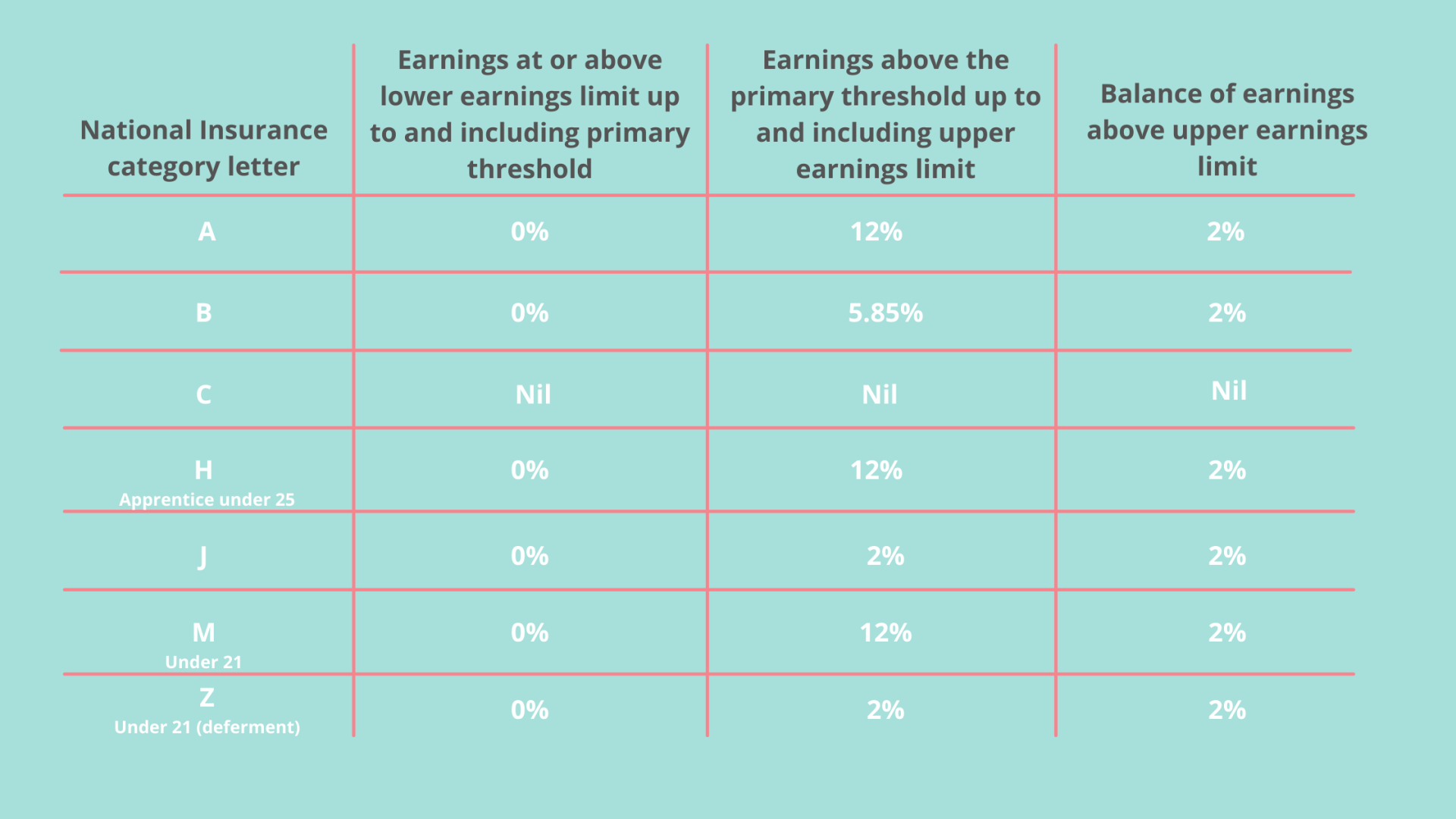
The below indicates how much an employer needs to deduct from an employee's wages for the tax year 2021/2022;

Example

If an employee falls under category A and they earn £1,000 in per week they will pay:

  • nothing on the first £184
  • 12% (£93.96) on their earnings between £184.01 and £967
  • 2% (£0.66) on the remaining earnings above £967

This means their National Insurance payment will be £94.62 for the week.


Employer National Insurance Rates

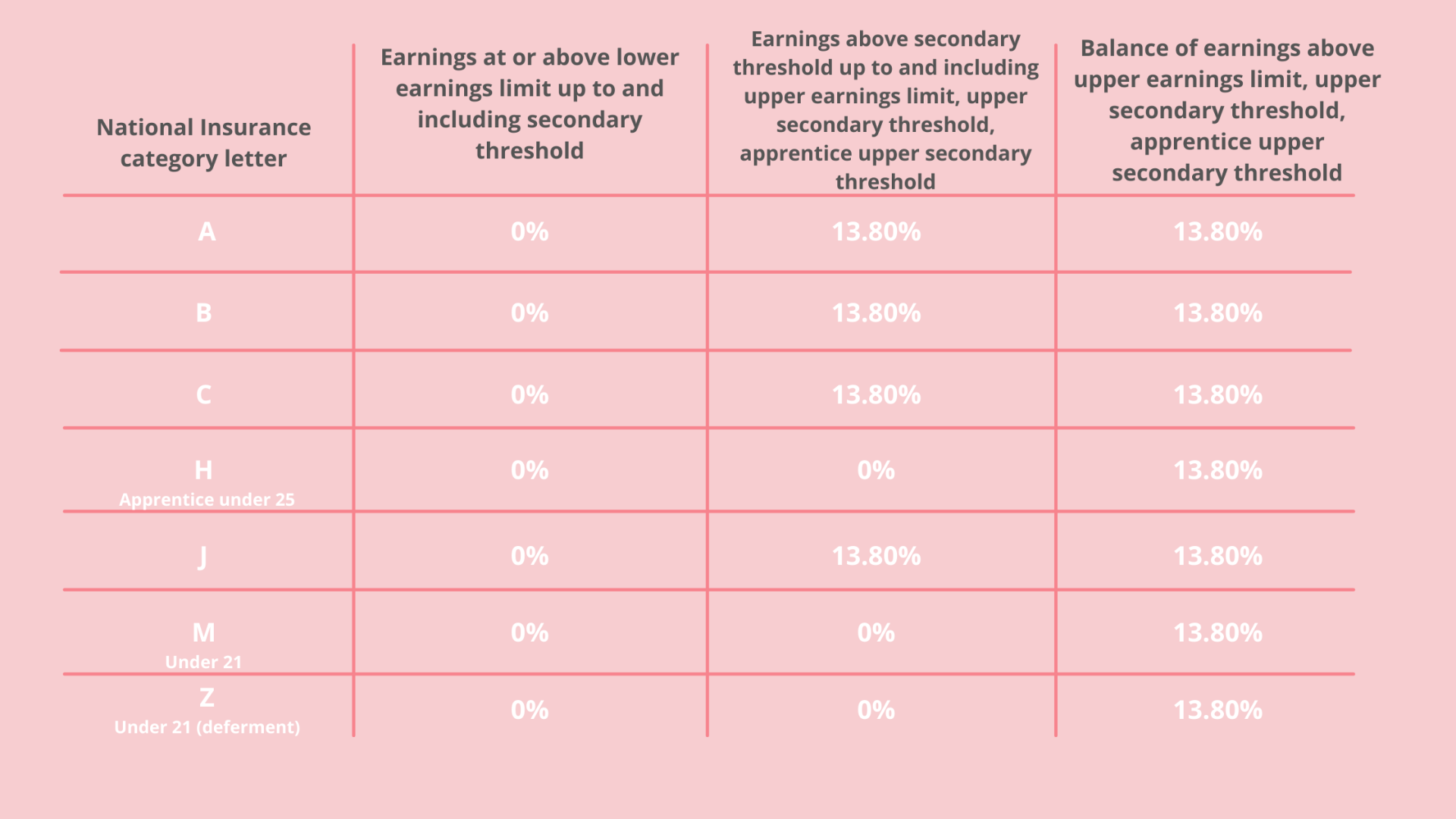
We will now look at how much, you as an employer will need to contribute (2021/2022);

Class 1A and Class 1B rates


If you pay your employees expenses or other benefits then you will need to pay Class 1A and 1B National insurance.


If you’re still confused about what contributions you need to pay then you can use HMRC’s online calculator. Or better still leave your Payroll to Bluebells Bookkeeping Limited!


Get in touch
Grant folder on desk
by Annabel Barnes 21 January 2026
From application to reporting, every pound needs to be tracked, justified, and maximised. But with the right systems and a few expert tips, grant management doesn’t have to be a headache.
woman with notebook
by Annabel Barnes 7 January 2026
setting goals is one thing, but achieving them? That’s where the real work begins. And that’s exactly where your bookkeeper comes in.
Beauty Salon
by Annabel Barnes 25 December 2025
For beauty business owners, managing cash flow can feel like a full-time job in itself. With the constant juggle of appointments, product orders, staff schedules, and client payments, it’s easy for finances to slip down the priority list.
holding hands
by Annabel Barnes 11 December 2025
One important thing to know is what expenses you can and can’t claim through your business. Making sure you’re claiming every tax deduction you’re entitled to
lady stressed at computer
by Annabel Barnes 27 November 2025
Between keeping funders happy, supporting your beneficiaries and juggling a mostly voluntary team, finding the time and headspace to pull together your annual accounts can feel like a lot. The good news? With some simple habits and a clear checklist, preparing your charity’s annual accounts doesn’t have to be stressful
Construction tools and calculator
by Annabel Barnes 12 November 2025
Running a construction business comes with unique financial challenges. Between managing multiple projects, tracking materials costs, coordinating subcontractors, and dealing with payment delays, it's easy for the numbers to become overwhelming. Yet, regular financial reporting isn't just about keeping your books tidy,
restriction
by Annabel Barnes 30 October 2025
If you're a charity treasurer, understanding the difference between restricted and unrestricted funds is essential for accurate financial management and compliance. Getting this right ensures your charity operates transparently, meets legal requirements, and maintains trust for those that donate.
care home
by Annabel Barnes 15 October 2025
with the right strategies in place, you can take control of your cash flow and build a more financially stable care business. Let's explore the practical steps that will help you stay ahead.
man with head on desk
by Annabel Barnes 1 October 2025
Running a charity is incredibly rewarding work – you're making a huge difference. But even the most well-intentioned organisations can stumble when it comes to financial management. The good news? Most financial mistakes are entirely preventable with the right knowledge and systems in place.
Financial reports on a desk
by Annabel Barnes 18 September 2025
For many small business owners, keeping an eye on bank balances and invoices isn’t enough. That’s where Management Accounts come in.